






















-
 Single Family Plans
 - View All Single-Family Plans
- New Plans
- Open Floor Plans
- Best-Selling
- Exclusive
- Plans With 360 Virtual Tours
- More Single-Family Collections
-
 Garage Plans
 - View All Garage Plans
- Garages With Apartments
- 3 Car Garage Plans
- 2 Car Garage Plans
- 1 Car Garage Plans
- Garages With A Loft
- More Garage Collections
-
Recreation Plans
- Pool Houses
- Sheds
- Gazebos
- Workshops
- View All Recreation Plans
-
 Multi-Family Plans
 - Duplex Plans
- Tri-Plex Plans
- Four-Plex Plans
- View All Multi-Family Plans
-
Single Family Plans
- View All Single-Family Plans
- New Plans
- Open Floor Plans
- Best-Selling
- Exclusive
- Plans With 360 Virtual Tours
- More Single-Family Collections
-
Garage Plans
- View All Garage Plans
- Garages With Apartments
- 3 Car Garage Plans
- 2 Car Garage Plans
- 1 Car Garage Plans
- Garages With A Loft
- More Garage Collections
-
Recreation Plans
- Pool Houses
- Sheds
- Gazebos
- Workshops
- View All Recreation Plans
-
Multi-Family Plans
- Duplex Plans
- Tri-Plex Plans
- Four-Plex Plans
- View All Multi-Family Plans


Modern Mudroom Design Ideas & Floor Plans
July 19, 2024
Megan Hall


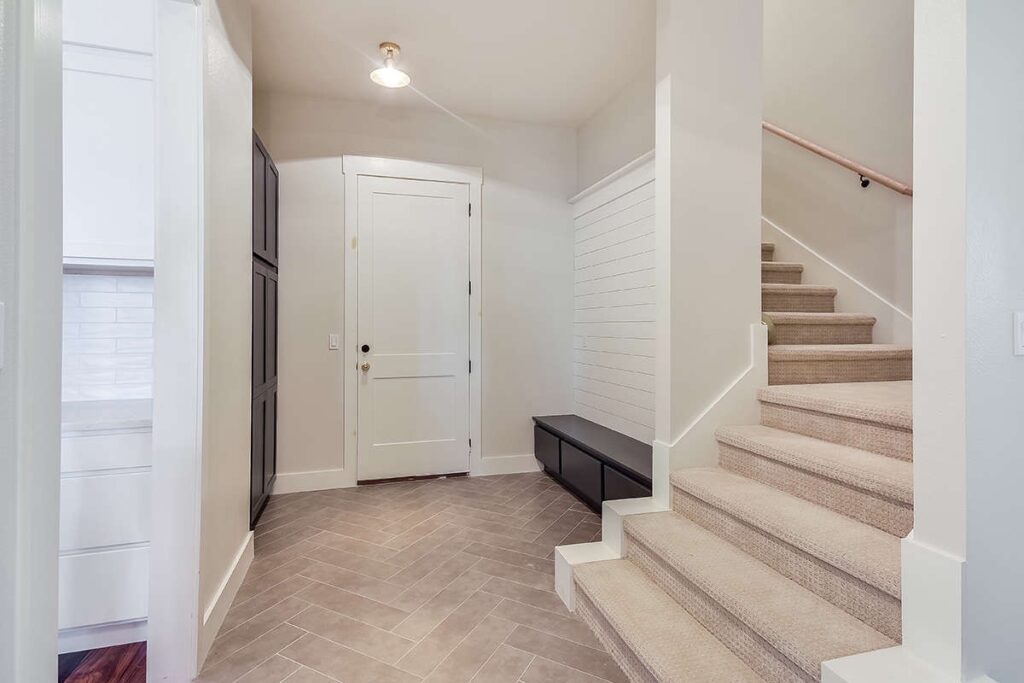
What is a Mudroom?
Mudrooms are smaller areas of the home, usually placed by a side or back door, intended to be designated areas for people to place their shoes when entering the home. A mudroom typically features a bench or seating area surrounded by cubbies or cabinets, providing extra storage space and a convenient spot to sit and remove shoes. The name “mudroom” reflects its intended use as a place to store muddy boots and shoes when you come home. Now, these areas have become convenient drop-off zones for families coming home. Kids can easily leave their backpacks, and moms can hang up their purses with the comfort of knowing everything will be in the same spot when it’s time to leave again.
What are the good dimensions for a mudroom?
A “good-sized” mudroom can vary depending on the overall size of the house. Naturally, if the home has a larger square footage, you can opt for a more spacious mudroom and vice versa. Mudrooms aren’t necessarily meant to be super large spaces and typically end up being about 50 square feet. For potential dimensions of mudrooms, 6 x 6 ft or 7 x 9 ft are commonly recommended. However, if you have a larger family and want more space, a mudroom of 12 x 10 ft or 15 x 7 ft may be preferred for you. There’s no right or wrong; it’s really about what works best for your family and how much space you want!
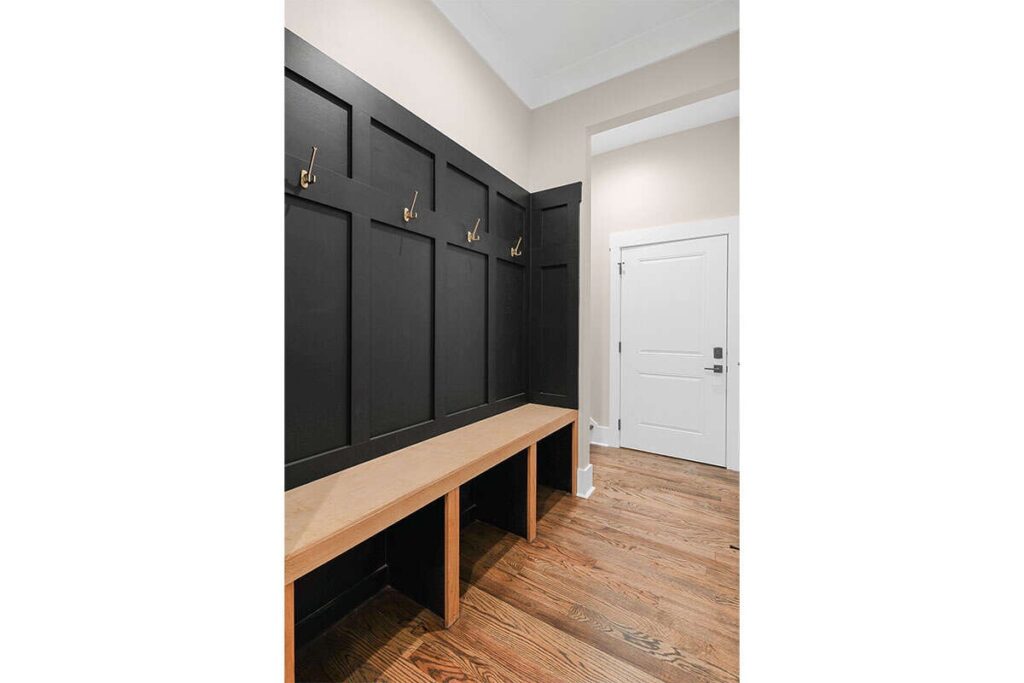
Why do houses have mudrooms?
Mudrooms originated in more rural homes, where they served as transitional areas to keep mud, dirt, and outdoor debris from being tracked into the main living spaces after working outside all day. As homes and lifestyles evolved, so did mudrooms; they are very common in most houses now because they serve as a multifunctional storage area for families to keep shoes, bookbags, coats, and outdoor gear. Mudrooms help you declutter by providing organized storage space with the added benefit of keeping your floors clean!
Does a mudroom increase home value?
Mudrooms, like other additional storage options, can enhance the value of your home. While a mudroom might not dramatically boost the overall property value, it can significantly appeal to potential buyers. Additional storage solutions are particularly attractive to families with children, as everyone values having extra space to keep their home organized and clutter-free. Such features can make your home stand out in the market, drawing the interest of buyers who prioritize practicality and convenience.
What makes a good mudroom?
There are several key features that can transform a mudroom into a valuable addition to your home! Sitting areas and storage space are common necessities for mudrooms as they allow you to comfortably remove your shoes, coat, etc., and give you a designated space to put them in. For a comfortably sized mudroom, it’s recommended to make the width no smaller than 5 ft. This provides extra space for multiple people to enter at once, reducing congestion and ensuring smooth traffic flow as everyone takes off their shoes or puts away their belongings. The rest really comes down to personal preferences and figuring out how large you want the mudroom to be and how much storage you need. It should suit you and your family’s needs best!
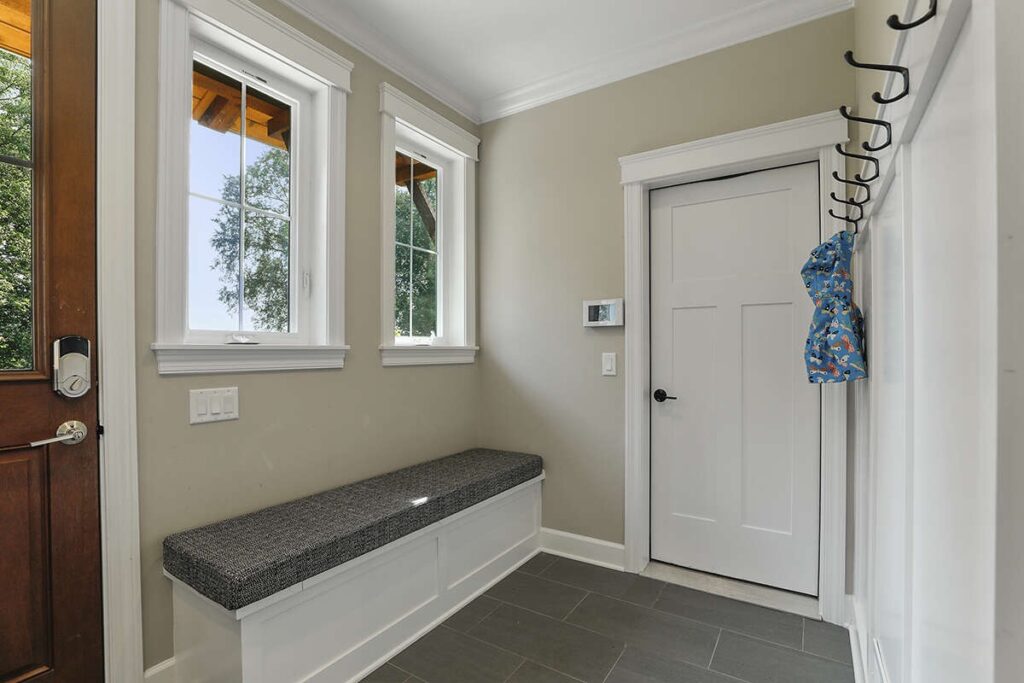
What is the best floor for a mudroom?
Since mudrooms are designated areas for removing dirty shoes and accessories, they can become quite messy and grimy. Because of this, it’s important to choose the right flooring to withstand wear and tear in your mudroom. It’s best to find suitable waterproof flooring for messy areas to make it easy to clean! Options like porcelain tile, vinyl flooring, or laminate flooring are ideal, as they prevent damage from swelling, warping, or mold growth, making them great choices for mudrooms.
Should a mudroom have a sink?
Sinks can be very useful accessories to mudrooms! A sink in the mudroom can be useful in many ways, especially if you value cleanliness. Since the mudroom is a high-traffic area where people are constantly coming and going, adding a sink can be incredibly useful. It allows you to wash up as soon as you come in from working outside. Whether it’s your hands, gardening tools, work boots, or stained clothing, you’ll have a convenient place to clean them as soon as you walk in.
What is a modern mudroom?
Modern mudrooms aren’t drastically different from standard mudrooms, but they elevate the typical bench and storage setup by seamlessly combining practicality with contemporary style. Contemporary and modern styles often favor a clean, sharp look with lots of straight lines, simple designs, and multifunctional spaces. Modern mudrooms emphasize storage space, often featuring large cabinets and cubbies to ensure everything has its place and the area remains well-organized and tidy. Often, modern mudrooms connect to the laundry room area too – adding more convenience for your family.
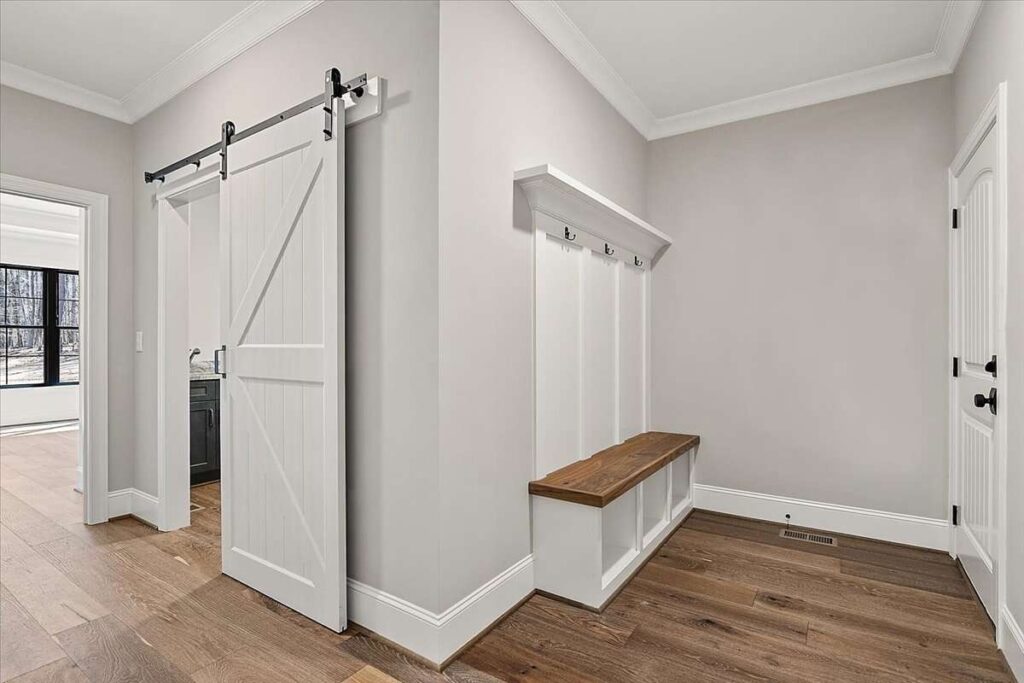
Where should a mudroom be located?
Mudrooms should be located wherever the house will be entered the most. Common areas for mudrooms are typically by a side, kitchen, or garage entryway. Most of the time, you won’t find a mudroom by the front door entrance, as people prefer to keep the main entrance spacious and inviting. However, there’s no definitive location for a mudroom; it should be placed in the area that receives the most foot traffic from you and your family.
As you explore the idea of a mudroom within your house plan, our collection of 4,400+ house plans with mudrooms will give you better insight.
Contact us with any questions regarding our mud rooms or house plans!

Megan Hall
Megan is the Director of Marketing at America’s Best House Plans, focused on creating clear, engaging customer experiences. She leads brand and digital strategy while continually finding ways to improve efficiency behind the scenes. Collaborative and customer-driven, Megan plays a key role in how the company connects with and serves its customers.
Related Articles
June 1, 2026
/Alexis Fordham
Ranch vs. Two-Story Homes: Which Is Better for Your Lifestyle?
The number of floors in a home affects far more than its appearance. It influences how easily the…

May 19, 2026
/Alexis Fordham
Modern Farmhouse Versus Craftsman: Which Style Best Fits You?
Modern Farmhouse Versus Craftsman: Which Style Best Fits You? Some homes feel bright and…
May 3, 2026
/Megan Hall
Modern Farmhouse Plans: Why This Style Still Dominates (and How It’s Evolving)
The Modern Farmhouse style has been a favorite among homeowners for years. Its success comes from…
April 28, 2026
/Alexis Fordham
Why Multigenerational House Plans Are Shaping the Future of American Living
In today’s housing market, the definition of the “modern home” is evolving and fast. One of…
April 22, 2026
/Alexis Fordham
Small Barndominium Floor Plans That Maximize Space
Barndominiums have quickly become one of the most popular choices for homeowners who want flexible…
December 30, 2025
/Alexis Fordham
2025 Spotlight – Your Most Loved Home Designs of the Year
From Modern Farmhouses to mountain-ready retreats, these are the 12 house plans that defined…
November 6, 2025
/Alexis Fordham
Reimagining a Classic: How White & Woodgrain Customized Plan 041-00348 into a “New–Old Cottage”
When Brittany Hutchison, creator of White & Woodgrain, set out to design a home for her parents…
October 29, 2025
/Megan Hall
How Modification Requests Are Typically Handled
Modifying Your Dream Home Starts Here Choosing a stock house plan doesn’t mean settling for a…
October 7, 2025
/Tim Hampton
Gables & Dormers: Form, Function & Flair Across Home Plan Styles
Barndominiums, Modern Farmhouses, and rustic cabins all share a unique design language, but few…